

One router in the corner of the house was fine when a home had one laptop and one phone. Today the same house has a work laptop on a video call, a TV streaming in 4K, a console downloading a game, and twenty smart devices quietly chatting in the background — and the bedroom at the far end still gets one bar. A mesh WiFi system fixes that specific problem: instead of one box shouting from a corner, two or three nodes work together as a single network, handing your phone over seamlessly as you walk from room to room. This guide to the best mesh WiFi routers in 2026 covers WiFi 6, WiFi 6E and WiFi 7 systems, from a genuinely cheap fix to a whole-home flagship.
Price note: Prices below are approximate street prices in USD at the time of writing and they change often with sales, pack size and region. Always check the current price before buying — and compare the same pack size, because a 1-pack and a 3-pack of the same system are very different deals.
What to prioritise before you buy
- Coverage first, speed second. Match the pack to your home size plus 20–30% for walls and floors. A 2-pack suits most homes; go 3-pack for multi-storey or 3,000+ sq ft homes.
- WiFi generation. WiFi 6 is plenty for plans up to gigabit. WiFi 6E adds a clean 6 GHz band that shines as a wireless backhaul. WiFi 7 adds Multi-Link Operation, but only pays off with WiFi 7 devices and a fast plan.
- Backhaul. If you can run an Ethernet cable between nodes, do it — wired backhaul is the single biggest real-world upgrade, whatever system you buy.
- Ports. Count the Ethernet ports per node. Consoles, TVs and PCs are happier wired, and multi-gig ports only matter if your plan is faster than gigabit.
- Subscriptions. Some brands charge monthly for advanced security and parental controls; others include them free for life. Check before you buy, not after.
TP-Link Deco X55 — Best Budget Mesh WiFi
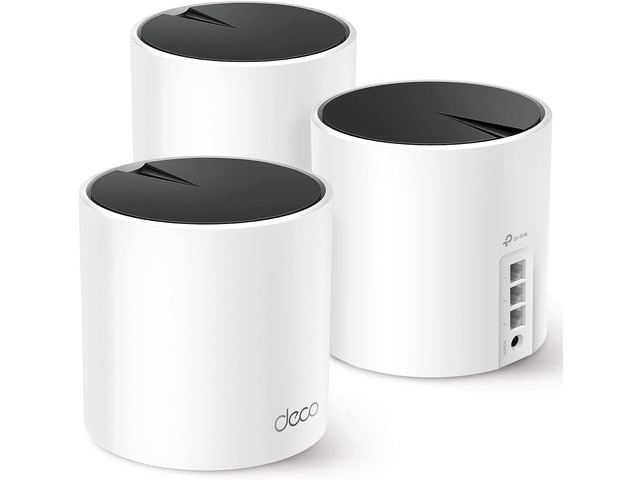
The Deco X55 is the system to buy when the problem is coverage, not speed. It is a dual-band WiFi 6 (AX3000) system — 2,402 Mbps on 5 GHz plus 574 Mbps on 2.4 GHz — rated for up to 6,500 sq ft in a 3-pack and up to 150 devices, with three gigabit Ethernet ports on every unit. That port count is unusually generous at this price and makes it easy to wire a TV or console at the far node. The trade-off is honest: dual-band means the wireless backhaul shares airtime with your devices, and there is no 2.5G port, so it will never suit a multi-gig plan.
Sesuai untuk: flats, small-to-medium homes and anyone upgrading from a single ISP router on a gigabit-or-slower plan.
TP-Link Deco XE75 — Best Value WiFi 6E Mesh

The Deco XE75 adds the missing piece of the X55: a 6 GHz band. This tri-band WiFi 6E system (AXE5400 — 2,402 Mbps on 6 GHz, 2,402 Mbps on 5 GHz, 574 Mbps on 2.4 GHz) uses the clean 6 GHz band as backhaul, so nodes talk to each other without stealing airtime from your devices. TP-Link rates the 3-pack at up to 7,200 sq ft and 200 devices, with three gigabit ports per unit and the Deco app's AI-driven mesh. It is the sweet spot for most buyers in 2026: genuinely faster in busy homes than any WiFi 6 dual-band system, without WiFi 7 pricing.
Sesuai untuk: most families — the best balance of price, coverage and real-world speed in this guide.
Google Nest Wifi Pro — Best Mesh WiFi for Google Homes

If your home already runs on Google Home, the Nest Wifi Pro is the least-friction upgrade. It is a tri-band WiFi 6E system (AXE5400) with up to 2,200 sq ft per router — 6,600 sq ft in a 3-pack — handling up to 100 devices per point, with automatic WiFi optimisation, WPA3 and a built-in Thread border router with Matter support, so it doubles as a smart-home hub. Setup in the Google Home app takes minutes, and there is no subscription for its core controls. Watch two limits: its Ethernet ports are gigabit only, and it cannot mesh with older Google Wifi or Nest Wifi units — the whole network must be Pro.
Sesuai untuk: Google Home households that want set-and-forget WiFi and a Matter/Thread hub in the same box.
Amazon eero 6+ — Best Simple Mesh WiFi
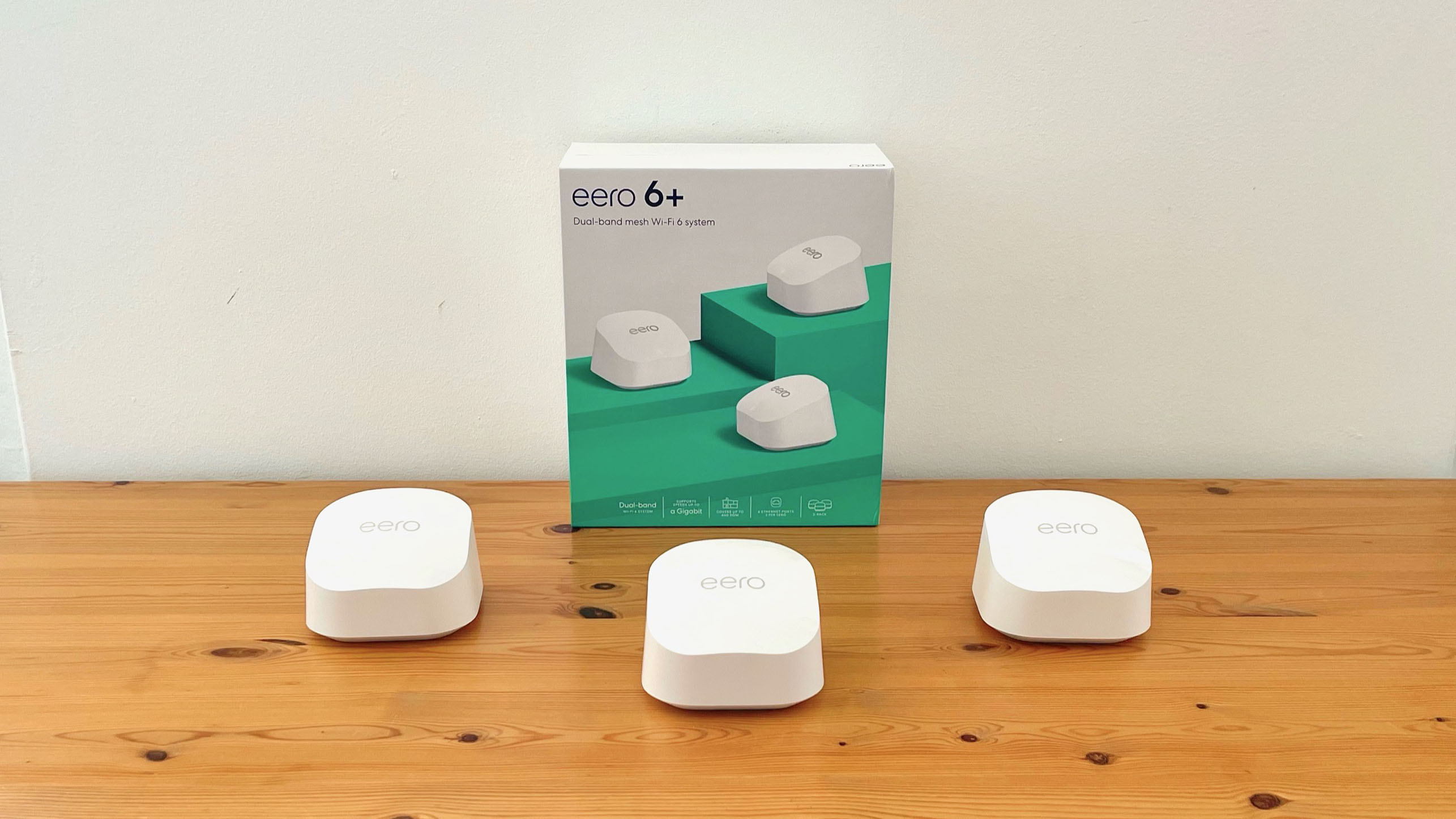
The eero 6+ is the system for people who never want to think about their router again. This dual-band WiFi 6 (AX3000) system supports internet plans up to a gigabit, covers up to 1,500 sq ft per unit (4,500 sq ft in a 3-pack), supports 75+ devices, and includes a built-in Zigbee/Thread smart-home hub. Its patented TrueMesh software routes traffic to reduce drop-offs, and automatic updates keep it improving over time. The cost of that simplicity is control: there is no web interface worth speaking of, and the deeper security and parental features sit behind the eero Plus subscription.
Sesuai untuk: apartments and smaller homes, and anyone who wants the easiest setup in this guide — especially Alexa households.
ASUS ZenWiFi XT9 — Best Mesh WiFi for Power Users
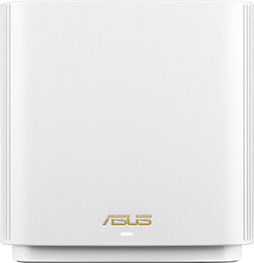
The ZenWiFi XT9 is the pick for buyers who actually enjoy router settings. This tri-band WiFi 6 system (AX7800 — 4,804 Mbps on the second 5 GHz band, 2,402 Mbps on the first, 574 Mbps on 2.4 GHz) covers up to 5,700 sq ft in a 2-pack, with a 2.5G WAN port, three gigabit LAN ports and USB 3.2 per node, plus AiMesh so it can expand with any AiMesh-compatible ASUS router. Its headline advantage is free: AiProtection Pro security and advanced parental controls carry no subscription, and the full ASUS Router app plus a real web interface give you VPN server/client options the app-only brands simply do not offer.
Sesuai untuk: power users, gamers and home-lab owners who want deep controls without a monthly fee.
NETGEAR Orbi 770 (RBE773) — Best WiFi 7 Mesh for Large Homes
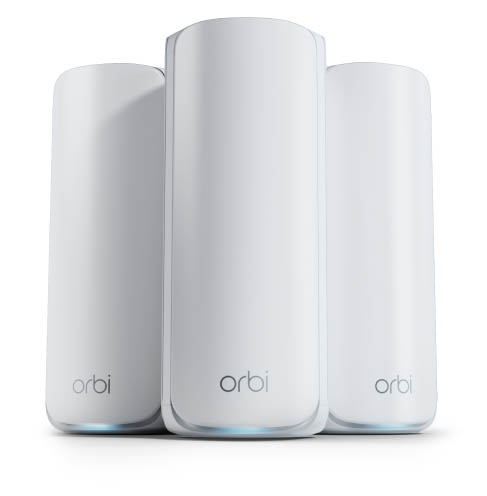
The Orbi 770 is the mid-range WiFi 7 system that makes the most sense for big houses. The 3-pack (RBE773) delivers BE11000 tri-band WiFi 7 — up to 11 Gbps combined — across up to 8,000 sq ft for up to 100 devices, with a 2.5G WAN port, 2.5G LAN ports on the router and satellites, and NETGEAR's enhanced backhaul keeping speeds up across all three units at once. It is not cheap, and the full Armor security suite needs a subscription after its trial, but for a large or multi-storey home on a fast fibre plan, it is the most future-proof system here that does not cross into flagship pricing.
Sesuai untuk: large and multi-storey homes, and households with a multi-gig plan and many WiFi 7 devices on the way.
TP-Link Deco BE63 — Best Overall WiFi 7 Mesh
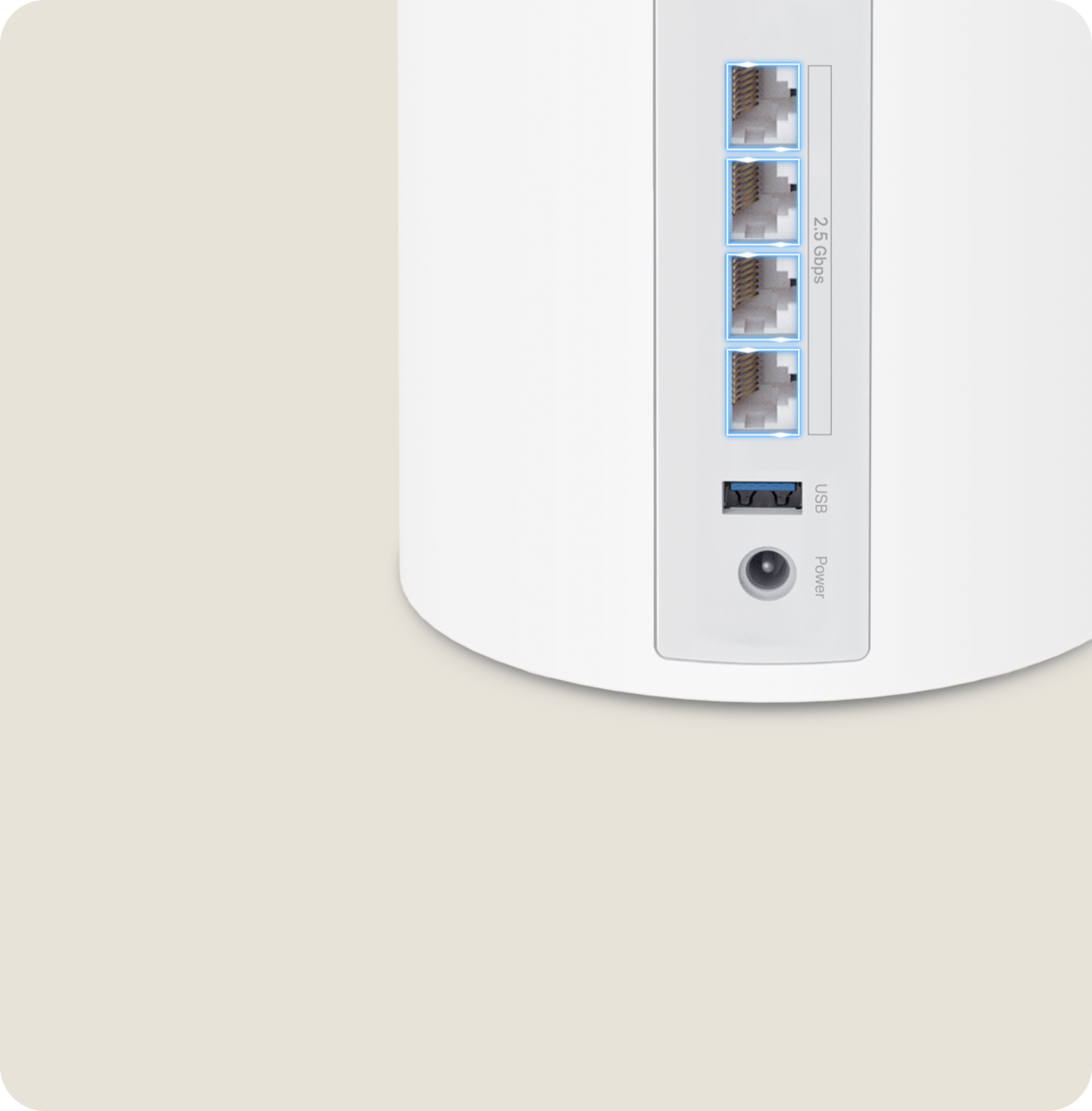
The Deco BE63 is the best all-round WiFi 7 buy in 2026. This tri-band system (BE10000 — 5,188 Mbps on 6 GHz, 4,324 Mbps on 5 GHz, 574 Mbps on 2.4 GHz in TP-Link's current spec) brings WiFi 7's Multi-Link Operation, 320 MHz channels on 6 GHz and 4K-QAM, with four 2.5G WAN/LAN ports per node — a port spec the pricier Orbi cannot match at this level — and up to 200 devices. The 2-pack covers up to 5,800 sq ft. Advanced HomeShield features need the Pro subscription, but the core system, app and basic protections do not. If you want WiFi 7 without paying flagship money, start here.
Sesuai untuk: buyers who want the newest standard at a sane price, especially on plans above gigabit.
Quick comparison
| Model | WiFi | Best for |
|---|---|---|
| TP-Link Deco X55 | WiFi 6, AX3000 | Budget homes |
| TP-Link Deco XE75 | WiFi 6E, AXE5400 | Best value overall |
| Google Nest Wifi Pro | WiFi 6E, AXE5400 | Google Home homes |
| Amazon eero 6+ | WiFi 6, AX3000 | Simplest setup |
| ASUS ZenWiFi XT9 | WiFi 6, AX7800 | Power users, no subscription |
| NETGEAR Orbi 770 | WiFi 7, BE11000 | Large homes |
| TP-Link Deco BE63 | WiFi 7, BE10000 | Best WiFi 7 value |
Buying tips
- Place nodes in the open, not in a cabinet. A node hidden behind a TV cabinet loses a huge share of its range before a single device connects.
- Two nodes well placed beat three badly placed. Start with the pack that fits your floor area, then add one node only where a dead zone survives.
- Wire what does not move. TVs, consoles and PCs on Ethernet free up wireless airtime for the phones and laptops that actually roam.
- Do not buy WiFi 7 for a 100 Mbps plan. The bottleneck is your plan, not your router — spend the difference on a better pack size or a wired backhaul instead.
FAQ
Is a mesh system better than a single powerful router? For coverage, yes — several nodes beat one radio, however strong, once walls and floors are involved. For a small flat, a single good router is still fine and cheaper.
Do I need WiFi 7 in 2026? Not yet, unless you have WiFi 7 phones and laptops and a plan faster than gigabit. WiFi 6E systems like the Deco XE75 and Nest Wifi Pro are the smarter buy for most homes today.
Can I mix brands in one mesh network? Generally no — mesh systems are designed to work within their own family (all Deco together, all Orbi together). Mixing brands usually means running a second, separate network.
Conclusion
For most homes, the TP-Link Deco XE75 is the pick: WiFi 6E, strong coverage and a fair price. On a tight budget, the Deco X55 solves the dead-zone problem for far less. If you want the newest standard without flagship pricing, the Deco BE63 is the WiFi 7 buy; and for a genuinely large home, the Orbi 770 earns its premium. Whichever you choose, place the nodes well, wire what you can — and tell us in the comments which dead zone you killed first.
